Learning how to backflush a cafe’s espresso machine is a crucial piece of any barista’s toolbox. Backflushing is a vital step to keep your espresso machine clean, but if you ask any two people how they backflush their machines, you’re likely to get two completely different answers.
Although most folks who have picked up a portafilter and pulled shots know the basics of backflushing—you do it to keep the groupheads clean and prevent buildup from coffee oils and debris—many still have questions: how often am I supposed to backflush? When should and shouldn’t I use detergent? What happens if I don’t backflush?
Questions like these are common and persist within the coffee equipment realm: after all, backflushing is all about taking care of espresso machines. So, we asked members of the La Marzocco team to help us develop the definitive guide to backflushing.
We chatted with Research and Development Manager Riccardo Gatti, Field Test and Product Improvement Manager Enrico Wurm, and Product Manager and Marketing Director Scott Guglielmino to learn everything you need to know about how to properly backflush and get the most out of your machine.
How to backflush an espresso machine in 5 steps
Before we get to the what, when, and why of backflushing an espresso machine, let’s go through the steps of the process:
- Take the portafilter out of the grouphead — you will still need this for cleaning, but make sure to take out the regular basket for brewing and insert a backflush disc or cleaning basket. This keeps the contents of the portafilter from leaking out during the backflushing cycle.
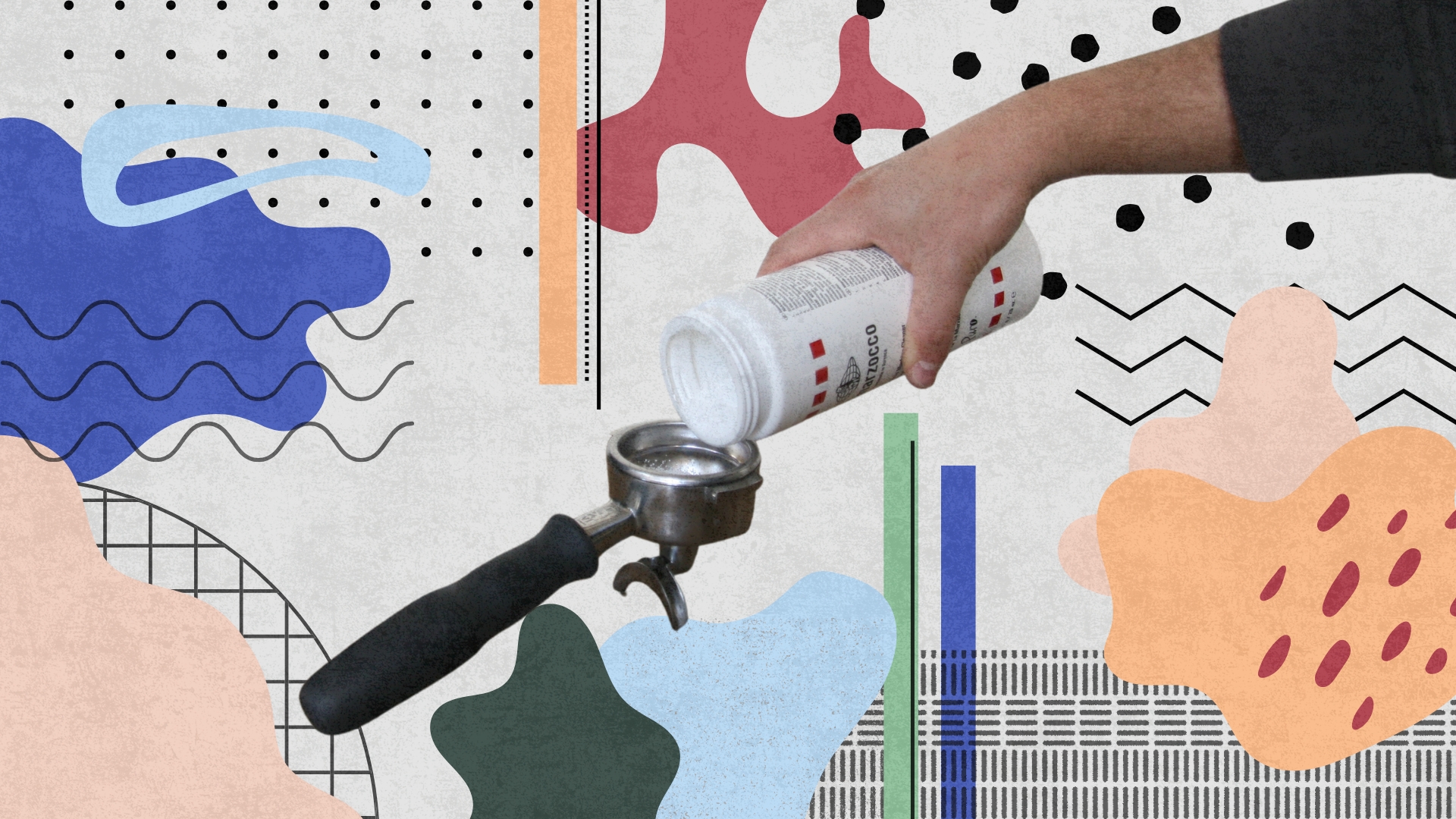
- Add powder cleaner to the portafilter basket — put about half a teaspoon of espresso machine cleaner into the backflush disc.
- Insert the portafilter back into the grouphead — make sure it is secured, like it is brewing espresso.
- Use auto cycle or manual method —
- Most new La Marzocco machines have an automatic backflushing program. Once the portafilter is secured, run the cycle until it is finished.
- If the espresso machine does not have an automatic backflush cycle, manually activate the brew cycle for 10 seconds. Turn off the brew cycle, listen for the pump to stop making noise, and then repeat this step 5 times.
- Rinse — remove the poratfilter and rinse the basket in a sink. Also, run the brew cycle on the grouphead without the portafilter inside to make sure no more espresso cleaning powder is in the grouphead.
Now, let’s discuss the concepts and guidance for backflushing an espresso machine with our experts.
What is backflushing an espresso machine?
Most folks know that backflushing is a cleaning process, but what does backflushing actually do?
Backflushing involves “cleaning every single part of [the machine] that gets in contact with coffee oil and exhausted coffee,” says Wurm. He says backflushing cleans “everything that lies under the diffuser screen.” Beyond the diffuser screen, there’s a pipe (where the diffuser screw is screwed in) that carries water to the espresso puck when you’re pulling a shot and also carries water after the shot is pulled to the drain box—backflushing cleans this entire ecosystem.
Not backflushing enough can impact flavor (coffee oils building up can cause coffee to taste rancid and old) and can restrict water flow over time (coffee debris can clog parts like the solenoid valve, which is responsible for allowing water to flow through the group head). Backflushing is also a closed-loop process per group head: you can backflush one group head without impacting another, and each group head must be cleaned separately.
As with any common process, it’s easy for misconceptions about backflushing to flourish. Wurm says he’s heard of baristas “using salt instead of cleaner” to backflush; a popular idea is that machines need to be “seasoned” before pulling shots, which might influence how often someone thinks they need to backflush. But as Wurm points out, “The espresso machine is not a cast iron pan.”
How often should you backflush your cafe’s espresso machine?
Perhaps the most persistent question around backflushing involves frequency: how often should people backflush their machines?
The unsatisfying answer: it depends. Contrary to popular belief, how often you should backflush isn’t totally tied to how frequently you use your machine. Gatti points out that if a machine sits idle for a long time, water isn’t moving through the group head, and coffee oils and debris have a better chance of building up and getting stuck.
The type of coffee you use can also impact how often you should backflush. A darker-roasted coffee has more oils and will stick to the group head versus a lighter-roasted coffee. In general, Guglielmino recommends that folks backflush every “two to four hours” and then at the end of the day, or to backflush for “every thousand dollars worth of business done.”
See more espresso guides: screens, gaskets, and baskets
But developing a backflushing schedule isn’t about hitting a minimum number of shots before cleaning: backflushing doesn’t harm the machine, so it’s better to do it more frequently than wait X number of hours or before Y number of shots pulled—in general, folks like Gatti, Wurm, and Guglielmino say they’ve observed maintenance issues from people not backflushing enough.
“For the time it consumes and the measure of prevention and improvement on quality,” says Guglielmino, “I think it’s better to err on the side of more than less.”
Now, most new La Marzocco machines are equipped with automatic backflushing cycles—just press a button, and the machine will automatically run the necessary cycles to backflush—but for those with older machines, the team recommends at least three cycles of on and off to backflush properly. When using soap or detergent, you should do one full cycle with soap and one with water.
What tools do you need to backflush an espresso machine?
Another point of confusion is what tools you need to backflush.
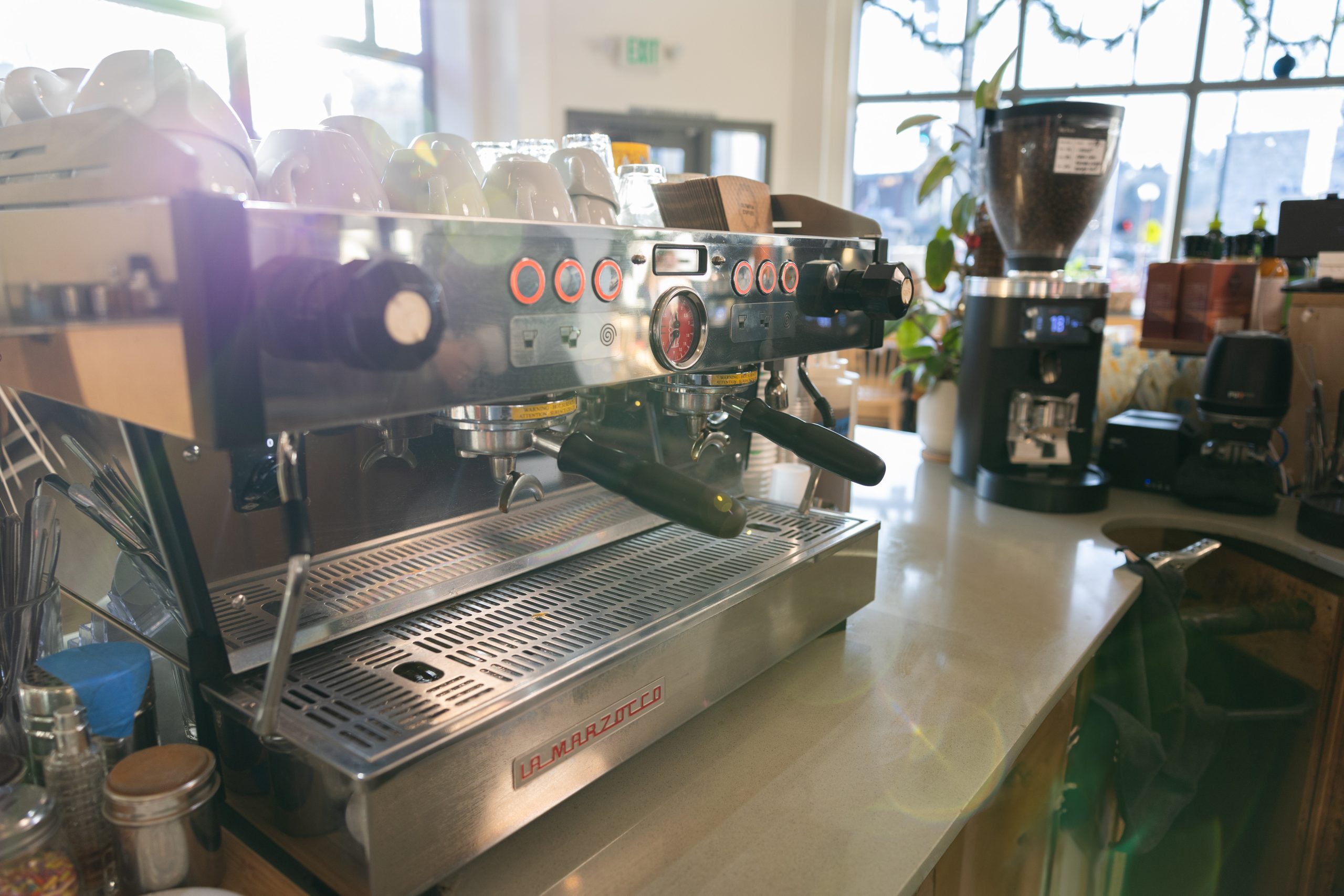
Many folks learn to take off the dispersion screen when backflushing—but the dispersion screen should stay on: it also needs to be cleaned, and the screen helps dissolve any cleaner or detergent you use. “If you don’t keep the dispersion screen on, you might suck particles of undissolved cleaner inside the group head,” says Wurm.
Gatti says he’s especially particular about how he cleans machines: he has an extra dispersion screen on hand that he swaps out when backflushing. “That will also affect the suction capacity of the valve,” he says. The cleaner the screen, the better you clean the pipe because there is more suction.” He’ll soak the used dispersion screen in a detergent bath while using the clean one to backflush.
Speaking of detergent, lots of folks have learned archaic—and perhaps entirely made up—rules about when and when they should use water versus a coffee-specific cleaner to backflush. Returning to the cast iron pan analogy, you don’t need to avoid soap for fear of ruining the “seasoning” of the machine. If you have time (since you need to run an extra water cycle to get all the soap out), run a cleaning cycle with detergent.
Gatti recommends paying attention to the detergent you use: some foam up and dissolve more easily than others, and you can dissolve the detergent crystals by adding a few drops of hot water into the blank portafilter.
Backflushing is a critical step in espresso machine maintenance, and understanding how it works—and dispelling rumors and misconceptions—is key to keeping your machine running smoothly for years. And just remember: when in doubt, backflush.