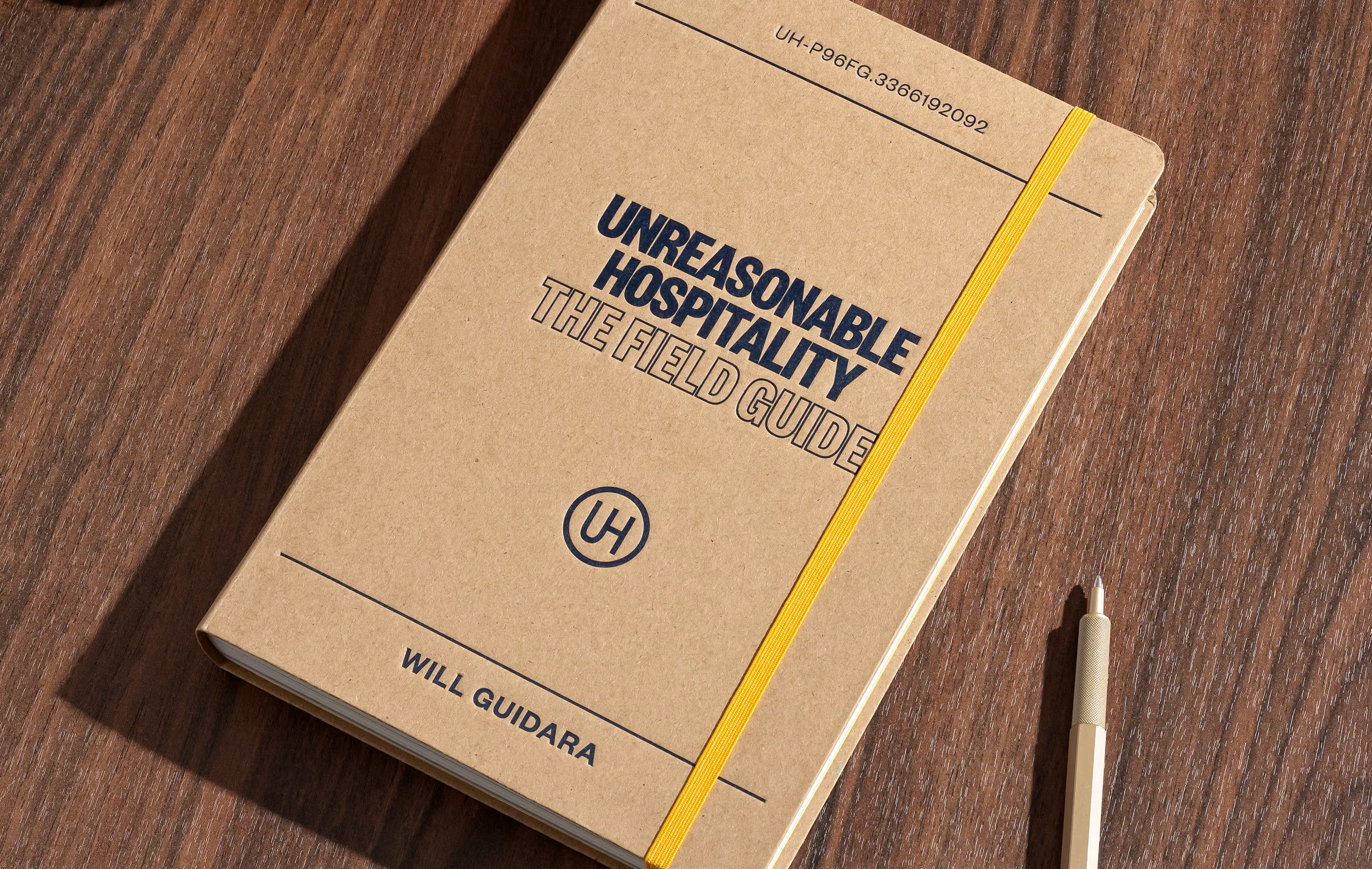
When Will Guidara wrote Unreasonable Hospitality in 2022, he wanted to share the stories about why hospitality matters. In his role as a co-owner of Eleven Madison Park in New York City, Guidara helped define modern service standards. But as the years went on, he realized that Unreasonable Hospitality was just the “why” part of the equation, and he wanted to give readers the “how” as well. Guidara teamed up with Invisible Creature to create a practical workbook titled Unreasonable Hospitality: The Field Guide, released in April of 2026, to help people incorporate the lessons from the first book into their daily lives. We spoke with Will Guidara of Unreasonable Hospitality and Don Clark of Invisible Creature about creating this book and how it can be used in cafés.
Tell us a little about why you wanted to create a field guide version of Unreasonable Hospitality.
Will Guidara: As I’ve traveled around over the past few years since the first book came out, I’ve been both touched and inspired by the number of companies from across every single industry that have been drawn to these ideas—people who resonate with the thinking and want to integrate it more into their own worlds. And yet, one of the most persisting questions has been: okay, but how exactly do we do it? And that’s ultimately what led to this book; if unreasonable hospitality is the why, this is the how. The idea was that some really ran with what they got from the first book, but this is meant to provide a more step-by-step instructional approach. If the first book is organized through my narrative arc, this is through a series of building blocks: how to build a team, how to create a culture of hospitality through focusing on collaboration and feedback and repair, and then how to make magic, really diving into the beauty of elevating an experience for the people you work with and those that you serve.
What was the process like to turn the informative stories of the first book into the field guide we have now?
WG: The best compliment I got about Unreasonable Hospitality was that it was a really good beach read, and that meant a lot to me because I wanted a book about hospitality to be inherently hospitable. Who wrote the rule that business books need to be boring to read? The stories drew people into the book and then almost tricked them into learning along the way. That same idea was very important to me with a workbook: a workbook about hospitality needed to be very hospitable itself. And that means it doesn’t feel like work; it is engaging and pulls you in. And when I had that realization, the next step was obvious to me. It was calling Don and begging him to do this book with me.
What was your process when you were designing out the elements that make this into a workbook?
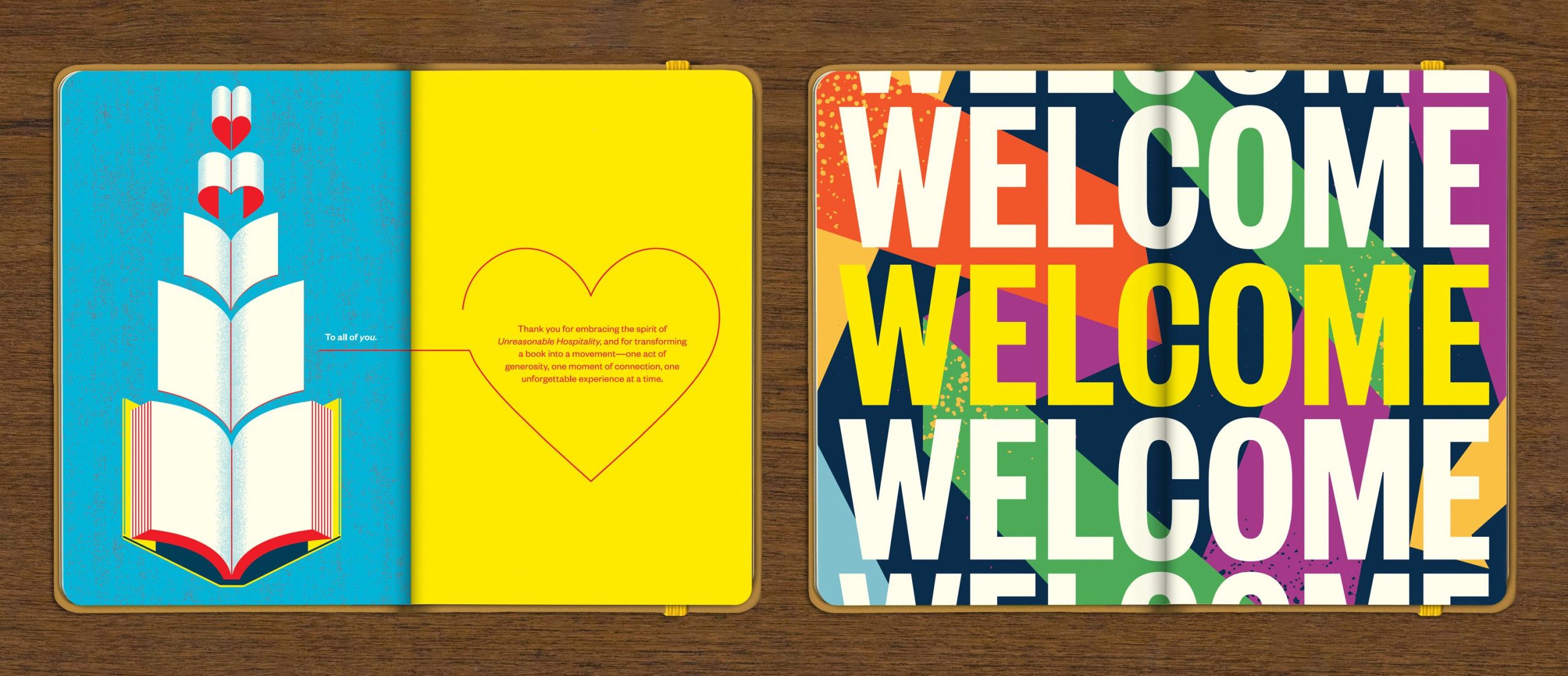
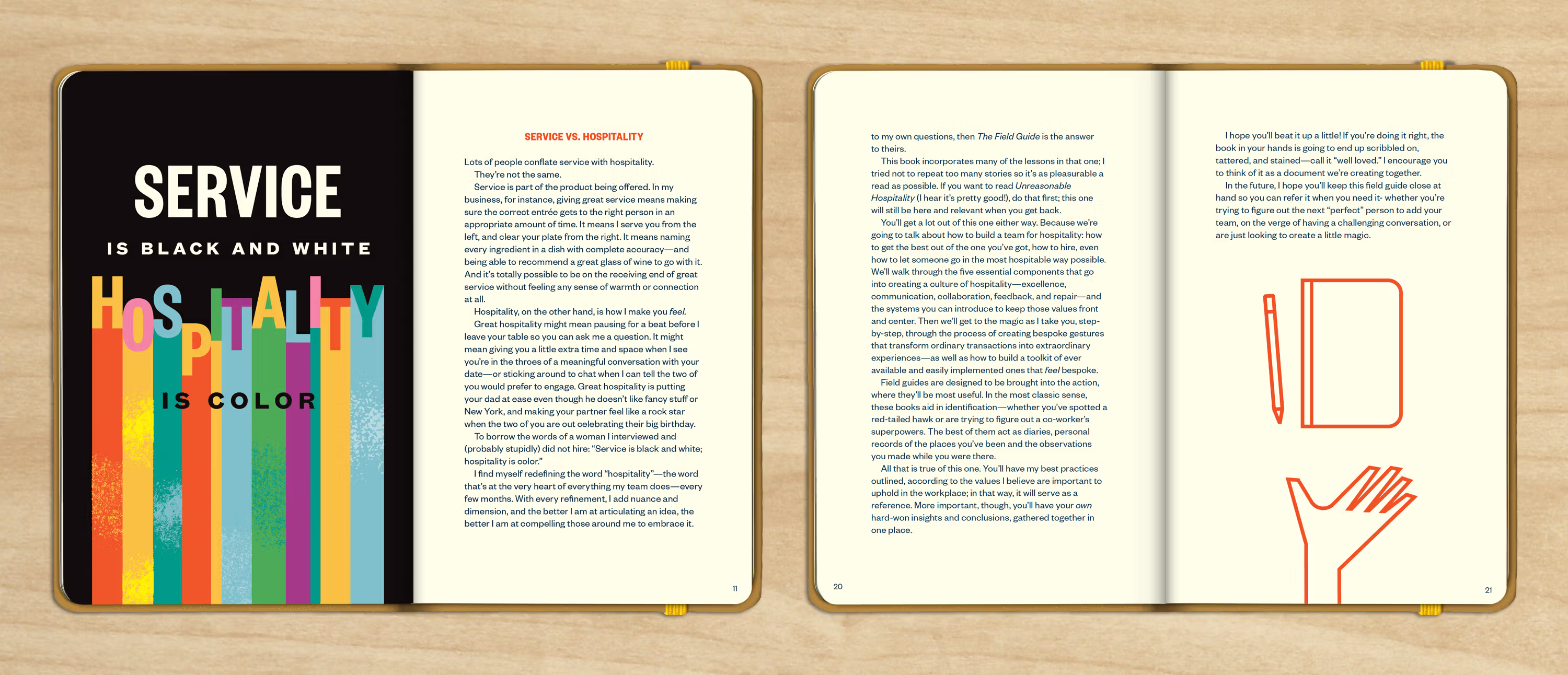
Don Clark: It all started with a conversation from Will. We started brainstorming. I think what we try to do at Invisible Creature with a design object is to create an heirloom, something that people want to keep around them, whether it’s on their shelf at work or at home—something just beautiful. And Will and I are on the same trajectory when it comes to that mindset. The cover inspiration is pretty clear: it’s very inspired by an old Boy Scouts or military manual, like a tactical guide. And we wanted to feel tactical and feel like something that you could bring with you. What I love about it is that it is reserved on the cover, and then you open it up, and it’s just beautiful. We started talking about old workbooks that we had as kids, just the stuff that we had fun filling out. So many of the adult workbooks are just, they feel like homework, they’re drab, they’re ugly, and we needed something that made readers want to engage with it. Essentially, threw the rules out the window and said, “What would be fun to make?” And Will just gave us extreme freedom on this, so we took the training wheels off and just went to town.
The first book is more restaurant-related, and this one is a little bit more expansive. How deliberately were you aiming to reach a much broader hospitality audience with the field guide?
WG: I mean, it wasn’t about targeting them as much as it was embracing them. The reality is that most of the stories in the first book are not just in restaurants. It’s spread across every single industry. It’s speaking in languages that everyone can more easily understand. I hoped that people from outside of restaurants would connect with the first book. I never expected it to be as widely embraced as it was. So, this was me embracing them back.
What is the main thing you want people to take away from the field guide that you think is an expansion of what they might have taken away from the first book?
WG: I mean, the biggest thing, and as far as ideas go, I think we dove far deeper into repair, not only with the people on your team, but the importance of truly investing, not just with money, but with creativity into guest recovery and those moments when you’ve messed up. We offer more data-driven scientific explanations and inspiration for experience design, showing how, through thoughtful recovery, you can leave people with lasting memories and effectively create legions of ambassadors who preach your message—all by virtue of having initially made a mistake.
Is there any specific idea in the workbook that you think is more applicable to cafés specifically?
WG: In a cafe environment where there aren’t a ton of employees. Every single person you add to your team has an outsized, asymmetrical impact on the team as a whole, so you’d better get each hire right. When it comes to creating a culture of feedback, the reality is that no group of people can be called to greatness absent consistent praise and consistent criticism. But doing those things without a roadmap for doing them thoughtfully, constructively, and effectively makes the culture worse. Doing them in the right way only makes the culture better.
Is there anything else you want to add that we may have missed?
WG: There’s a lot of surprise and delight in the book, like a restaurant experience, but there is also an entire game hidden inside for those who want to take the time to figure out how to play.
DC: Is that the first time you’ve talked about that, Will?
WG: This is the first time I’ve said it, but it feels like this community is the perfect place to leak it a little bit.
Unreasonable Hospitality: The Field Guide is available online or at a bookstore near you.